
Cockroaches are among the most resilient and medically significant pests in Australian homes, restaurants, and commercial properties. They can spread bacteria including Salmonella and E. coli, trigger asthma and allergies, and contaminate food preparation surfaces. That makes fast, well-planned cockroach control an urgent priority for property owners and managers.
This guide explains the proven cockroach control measures used by licensed pest management professionals. Whether the infestation is minor or severe, the same principle applies: identify the species, remove the conditions supporting them, monitor activity, then apply treatment precisely where cockroaches live and travel.
Understanding Cockroaches Before You Act
Correct identification is the first control measure. Different cockroach species have different hiding places, moisture needs, breeding rates, and responses to products.
German Cockroach
The most common indoor species, usually found in kitchens, bathrooms, appliances, cupboards, and warm service voids.
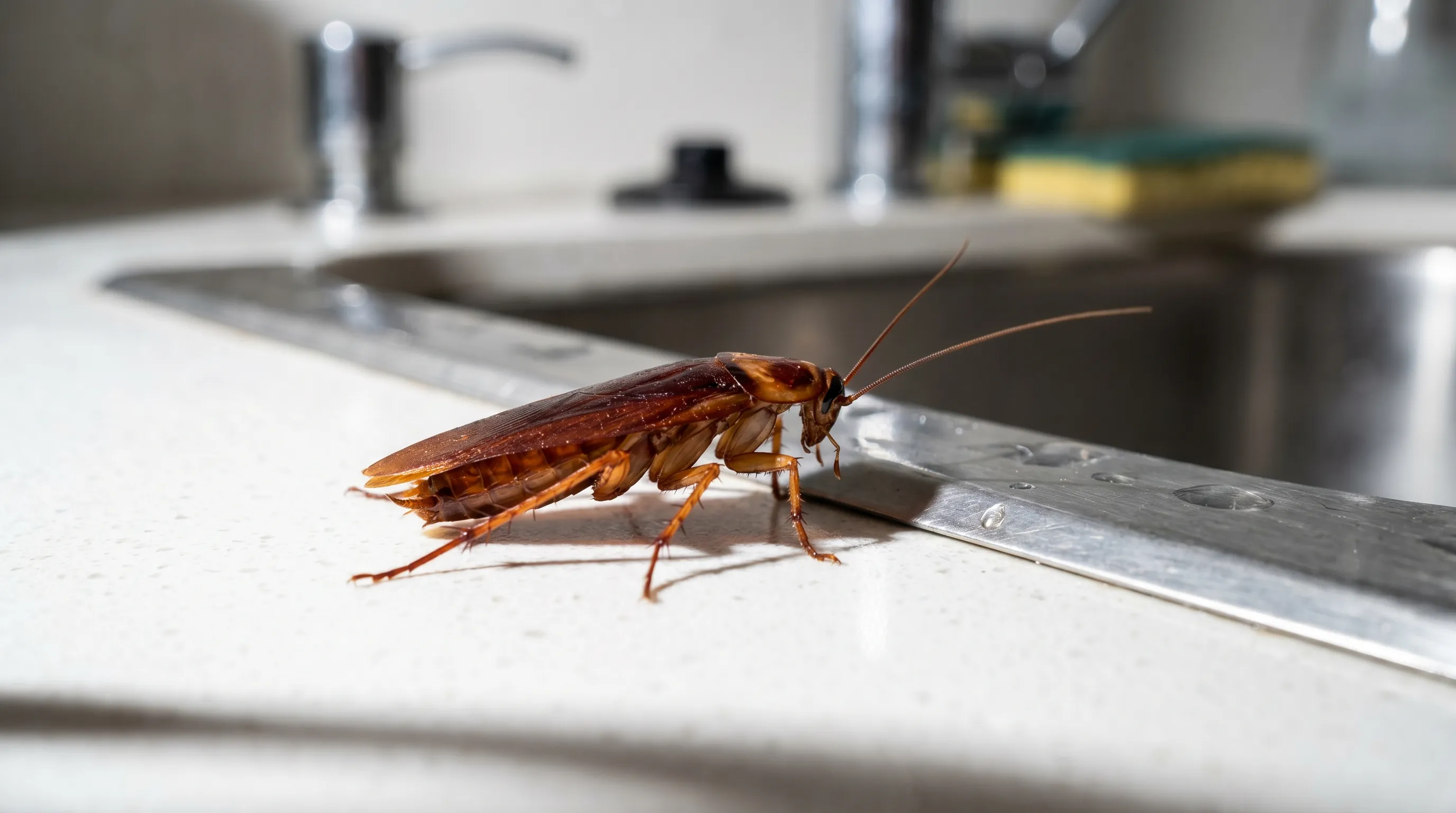
American Cockroach
A large reddish-brown cockroach common around sewers, drains, subfloors, plant rooms, and commercial sites.
Australian Cockroach
Similar to the American cockroach, it prefers warm outdoor areas but can move into buildings for food and shelter.
Oriental Cockroach
A dark, slower-moving species commonly linked with damp basements, drains, subfloor spaces, and other humid areas.
Choosing the wrong bait or spray for the wrong species wastes time and can push the infestation deeper into harbourage areas. If you are unsure which cockroach is present, start with glue board monitoring or book an inspection.
Integrated Pest Management: The Best Control Framework
Integrated Pest Management combines several control measures instead of relying on one product. It aims to reduce cockroach numbers with targeted treatment and less unnecessary chemical use.
1. Identification and Monitoring
Place glue board monitors in harbourage zones such as under appliances, inside cabinet hinges, behind refrigerators, near drains, and in subfloor voids. Check the boards after 48 to 72 hours to measure the infestation and identify where treatment should be focused. Continue monitoring after treatment so you can confirm whether activity is falling.
2. Prevention and Exclusion
Exclusion is one of the most cost-effective long-term cockroach control measures. Cockroaches cannot establish easily when entry points and hiding places are removed.
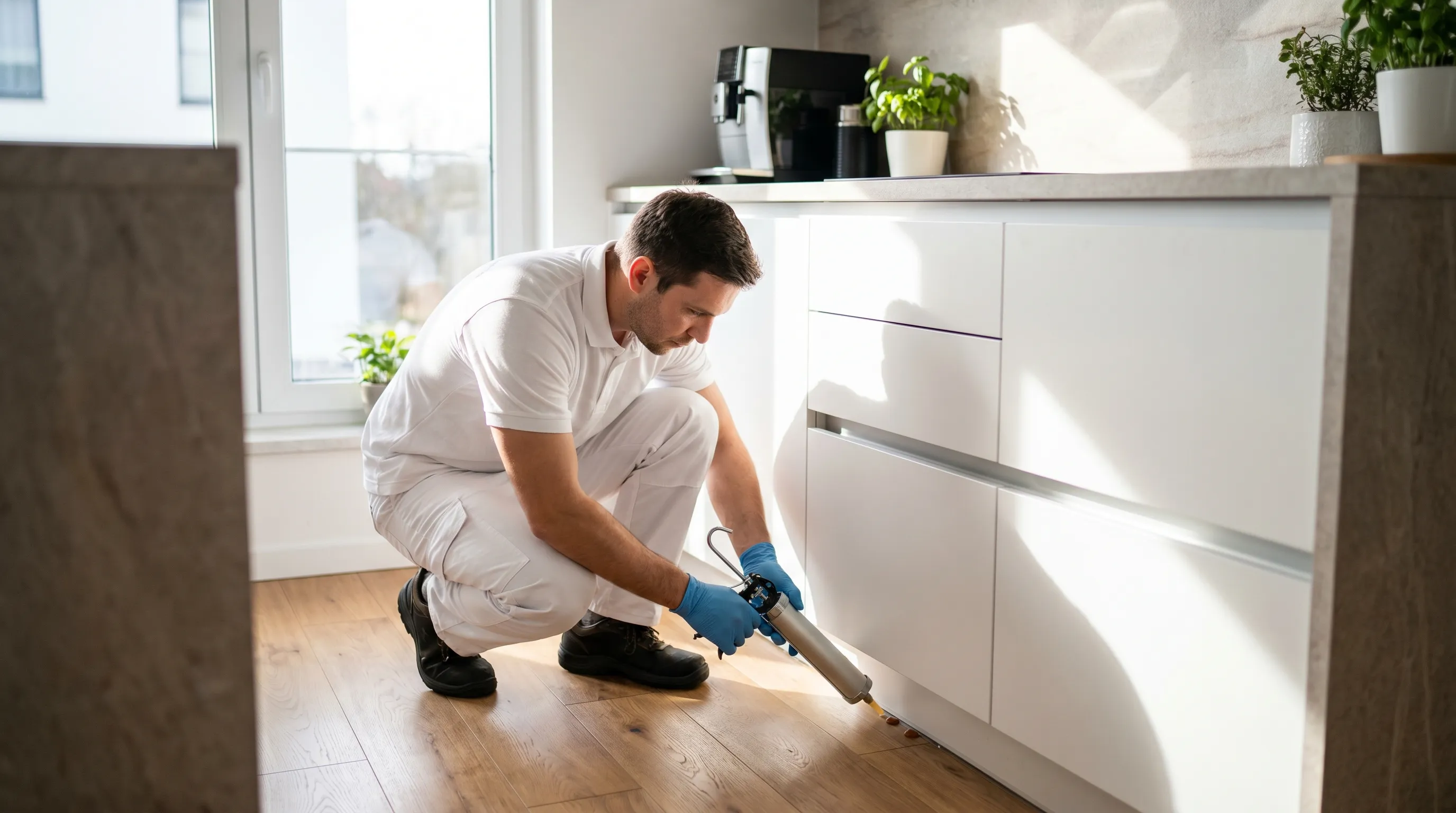
- Seal cracks and crevices around pipes, skirting boards, splashbacks, cabinetry, and kickboards with silicone caulk.
- Install brush-type door sweeps on external doors to close the common 6 to 10 mm entry gap.
- Repair damaged flyscreens, vent covers, and service penetrations.
- Fix leaking taps, pipes, shower bases, and condensation issues quickly.
- Use stainless steel wool or suitable pest-proofing material in larger utility gaps.
3. Sanitation
Cockroaches can survive on very small amounts of food and moisture. Sanitation will not always eliminate an established infestation by itself, but without it, baits and sprays are far less effective.
- Store food, including pet food, in sealed airtight containers.
- Empty bins daily in food preparation areas and use bins with tight-fitting lids.
- Clean under and behind appliances weekly, especially refrigerators, ovens, and dishwashers.
- Degrease range hoods, exhaust ducting, and commercial kitchen equipment regularly.
- Remove cardboard boxes and paper bags promptly because cockroaches use them for harbourage and egg laying.
In commercial kitchens, clean refrigeration compressor coil areas weekly. These warm, quiet, greasy spaces are one of the most common German cockroach harbourage sites.
Cockroach Control Measures You Can Do Yourself
Cockroach Baits
Gel baits are one of the most effective consumer-grade cockroach control products. Active ingredients such as indoxacarb, fipronil, or imidacloprid work through a slow-acting food matrix. Cockroaches eat the bait, return to the harbourage, then pass the effect through the colony when other cockroaches feed on them.
- Apply small pea-sized placements every 15 to 30 cm along harbourage zones.
- Place bait in dark sheltered areas such as hinges, motor housings, cracks, and wall voids.
- Rotate active ingredients between treatment cycles to reduce resistance risk.
- Avoid repellent surface sprays near bait because they can drive cockroaches away from the bait placements.
Cockroach Traps and Glue Boards
Glue boards with pheromone attractants capture cockroaches and help you measure activity. Place them at right angles to walls in areas where cockroaches travel. Replace them every 4 to 6 weeks, or sooner if they are more than half full.
Insect Growth Regulators
Insect Growth Regulators, known as IGRs, disrupt cockroach development by mimicking juvenile hormones. They do not always kill adult cockroaches immediately, but they prevent nymphs from becoming breeding adults. IGRs work especially well when paired with baits and contact treatments.
Boric Acid and Diatomaceous Earth
Boric acid powder can be applied as a fine film in dry voids and behind appliances. It adheres to cockroach bodies and causes lethal dehydration over 1 to 3 days. Food-grade diatomaceous earth works in a similar physical way by abrading the waxy cuticle.
These products lose effectiveness when wet or compressed, so they are best used in dry, undisturbed voids. Heavy application is not better. A light, barely visible film is usually more effective because cockroaches are less likely to avoid it.
Essential Oil-Based Repellents
Peppermint oil, eucalyptus oil, and clove oil products can provide short-term deterrence for minor incursions. They may be useful around food preparation surfaces where stronger products are not desired, but they are not a replacement for a proper treatment plan when an infestation is already established.
When to Call a Professional
DIY measures are reasonable for very early activity. Professional treatment is strongly recommended when the infestation persists for more than 2 to 3 weeks, cockroaches are seen during the day, the property is a food business or healthcare setting, multiple species are present, or activity is coming from inaccessible wall voids, roof spaces, or subfloors.
What Professional Treatment Includes
- A detailed inspection of kitchens, bathrooms, appliances, drains, voids, and external entry points.
- Targeted residual spray application in harbourage and travel zones where appropriate.
- Void dusting with suitable dust formulations in wall cavities, subfloors, and roof voids.
- Flushing agents where needed to drive cockroaches from hidden harbourage areas.
- Professional-grade gel bait placement using scheduled rotation.
- Post-treatment monitoring and follow-up visits for ongoing control.
Our Guarantee
Super Pest Controler provides a written 3-month service warranty on residential cockroach treatments. If cockroaches return within the warranty period, we retreat at no additional cost. Commercial clients can ask about ongoing IPM contracts for long-term protection and reporting.
Cockroach Control by Environment
Kitchens
Kitchens need the most intensive approach because they provide food, moisture, warmth, and shelter. Focus on dishwasher motor housings, under-sink cabinet hinges, refrigerator compressor zones, kickboard joins, drains, and appliance gaps. Gel bait is usually the preferred treatment, while surface sprays should be kept away from food-contact surfaces.
Bathrooms
Bathrooms attract cockroaches mainly because of moisture. Seal pipe penetrations through walls and floors, fix leaking taps and shower bases, improve exhaust ventilation, and treat vanity voids where activity is found.
Restaurants and Commercial Kitchens
Food businesses need documented pest management because premises must be maintained free of pests under Australian food safety expectations. A structured IPM programme with monitoring records, service reports, and routine follow-up helps protect customers, staff, and compliance.
Subfloor and Roof Void Areas
American and Australian cockroaches often use damp subfloors as a launch point into the building. Improve cross ventilation, reduce subfloor moisture, close external entry points, and use suitable residual dust or spray treatments in harbourage zones. Roof void treatments focus on gaps around eaves, tiles, vents, and service penetrations.
Preventing Reinfestation
Eliminating the current infestation is only part of the job. Long-term cockroach control depends on regular monitoring and keeping conditions unfavourable.
- Check glue boards monthly to detect new activity early.
- Inspect incoming deliveries, cardboard boxes, food containers, and second-hand appliances before bringing them inside.
- Maintain quarterly bait or spray programmes in high-risk areas.
- Train household members or staff on cleaning and food storage routines.
- Replace cracked silicone around wet areas every 3 to 5 years.
Frequently Asked Questions
How long does it take to get rid of cockroaches?
Minor infestations may show visible improvement within 1 to 2 weeks when sanitation, exclusion, and baiting are done properly. Moderate infestations treated professionally often show major population reduction within 3 to 4 weeks, with full control taking 6 to 8 weeks depending on the species and infestation level.
Are cockroaches dangerous to health?
Yes. Cockroaches can carry bacteria such as Salmonella, Staphylococcus, Streptococcus, and Pseudomonas aeruginosa. Their shed skins and droppings can also trigger allergies and asthma, especially in children and sensitive people.
What is the most effective cockroach killer?
No single product is best in every situation. The strongest results usually come from a combination of high-quality gel bait, IGRs, targeted residual treatments, sanitation, exclusion, and ongoing monitoring.
Can cockroaches become resistant to pesticides?
Yes. German cockroaches in particular can develop resistance to some pesticide classes. Rotating active ingredients and combining baits, IGRs, dusts, and non-chemical measures is the best way to reduce this risk.
Is cockroach pest control safe around children and pets?
When applied correctly by a licensed professional, modern cockroach control products can be used with low risk. Gel baits are placed in small amounts in inaccessible areas, and treated spaces are given clear re-entry instructions after residual sprays.
More Cockroach Control Resources
Cockroach Control Service
See our licensed treatment options, warranty details, and same-day availability.
Pest Control Price List
Compare average pest control costs for cockroaches, rodents, termites, and more.
Pest Control Sydney Costs
Local pricing factors, call-out fees, and treatment expectations for Sydney properties.
Commercial Pest Control
Ongoing IPM programmes for restaurants, kitchens, offices, warehouses, and retail premises.